


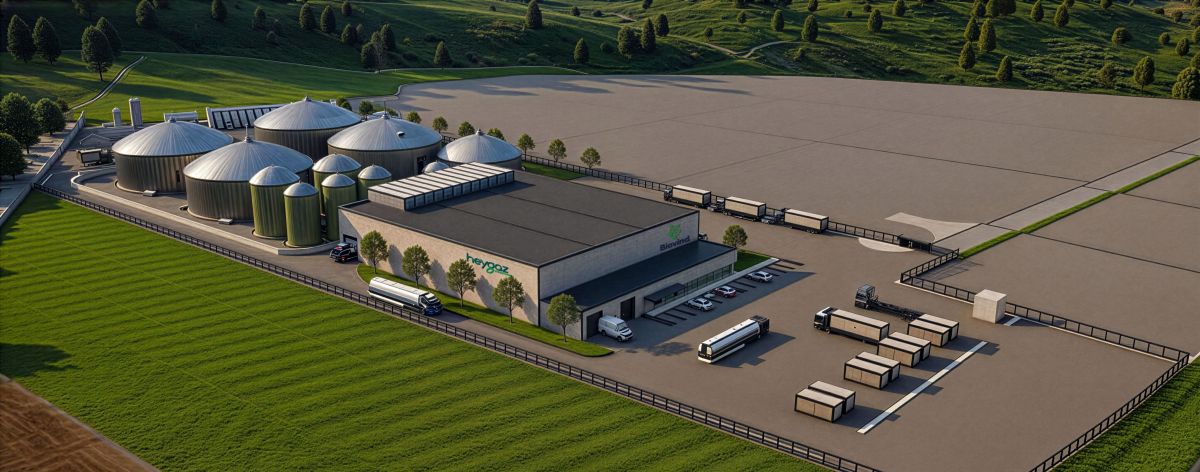
Biovind –Next-generation biomethane
Located in Ølen Næringspark in Vindafjord (Rogaland, western Norway), BIOVIND is embedded in a regional circular value chain linking more than 60 local farmers and major slaughterhouses with renewable fuel, bio-CO₂ and bio-fertiliser markets. The plant is expected to support jobs across the whole value chain—from feedstock logistics and plant operation to transport and fertiliser application—while addressing waste accumulation and treatment challenges.
BIOVIND - Biomethane Vindafjord will produce next-generation biomethane by converting about 226,000 tonnes of organic waste per year into around 85 GWh of high-purity biomethane, about 11,000 tonnes of biogenic CO₂ and 211,762 tonnes of biofertilizers per year.
By replacing diesel and fossil marine fuels and displacing chemical fertilisers and fossil CO₂, the plant is expected to avoid approximately 430,000 tCO₂e over the first ten years of operation. Relative GHG emission avoidance is estimated at about 176% compared to the reference scenario, with additional savings from digestate use and the capture and utilisation of biogenic CO₂.
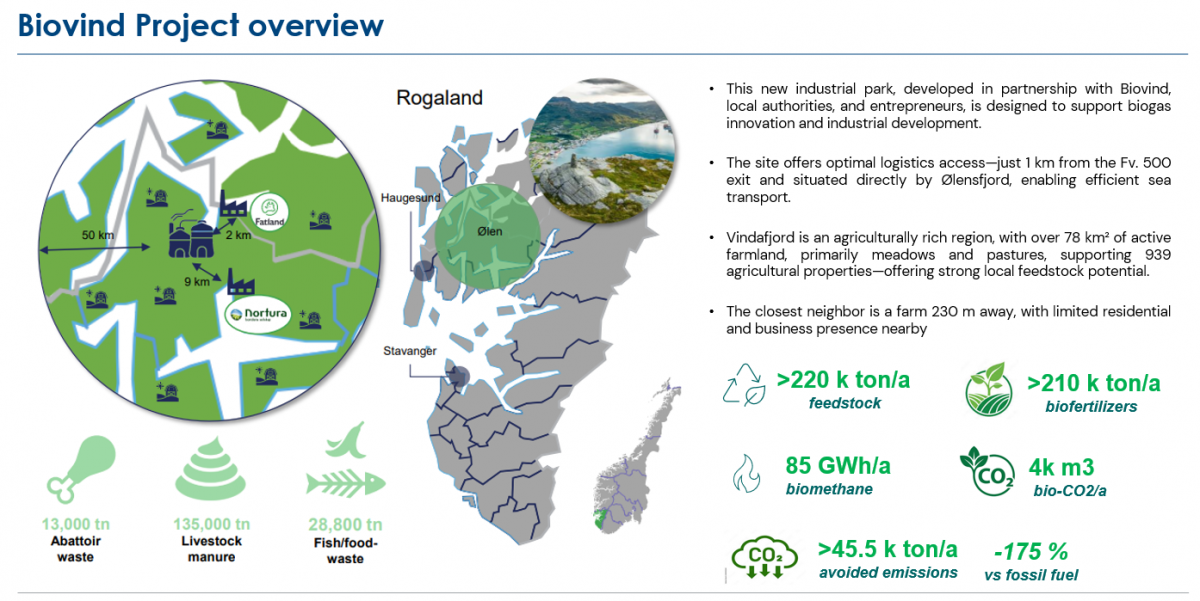
The project directly supports the European Green Deal, Fit for 55 and the Renewable Energy Directive by supplying renewable gas to hard-to-abate segments such as heavy-duty road transport and maritime shipping. Contributing around 85 GWh per year of sustainable biomethane, BIOVIND aligns with REPowerEU’s goal to scale EU biomethane production to 35 bcm by 2030. Using only residual organic waste streams, like fish silage, food waste, slaughterhouse waste, manure, it strengthens the circular economy, cuts methane and nitrous oxide emissions and supports emerging European policies on industrial carbon management through biogenic CO₂ capture and use.
BIOVIND’s innovation lies in the integration of advanced pre-treatment, large-scale anaerobic digestion and high-efficiency gas upgrading within a single, optimised facility. A proprietary high-temperature pre-treatment increases methane yields by at least 17% and shortens retention time (by roughly 25–30%), enabling high throughput with lower capital needs. Dual membrane upgrading delivers biomethane purity above 97% and food-grade liquid CO₂, while an AI-enhanced SCADA system maximizes uptime and energy efficiency.

Disclaimer: "Co-funded by the European Union. Views and opinions expressed are however those of the author(s) only and do not necessarily reflect those of the European Union or the European Climate, Infrastructure and Environment Executive Agency (CINEA). Neither the European Union nor the granting authority can be held responsible for them."
 |
 |
 |
 |